


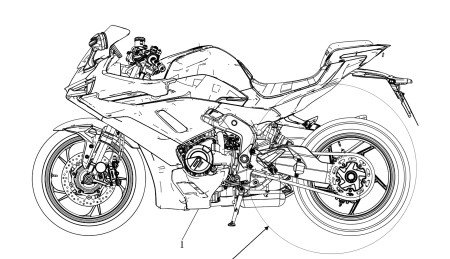
Chinese brand Voge is working on a higher-spec version of the RR500S with a single-sided swingarm. A new patent reveals an integrated air duct designed to solve a problem known for roughly 40 years: inadequate cooling of the rear brake.
Under this tag you will find articles related to patents and intellectual property filings within the motorcycle sector. This includes technical innovations, new engineering solutions and indications of potential future models or systems.
The list below brings together all content in which patent applications or related documents are discussed — ranging from engine and chassis concepts to electronic systems and design solutions.
Chinese brand Voge is working on a higher-spec version of the RR500S with a single-sided swingarm. A new patent reveals an integrated air duct designed to solve a problem known for roughly 40 years: inadequate cooling of the rear brake.
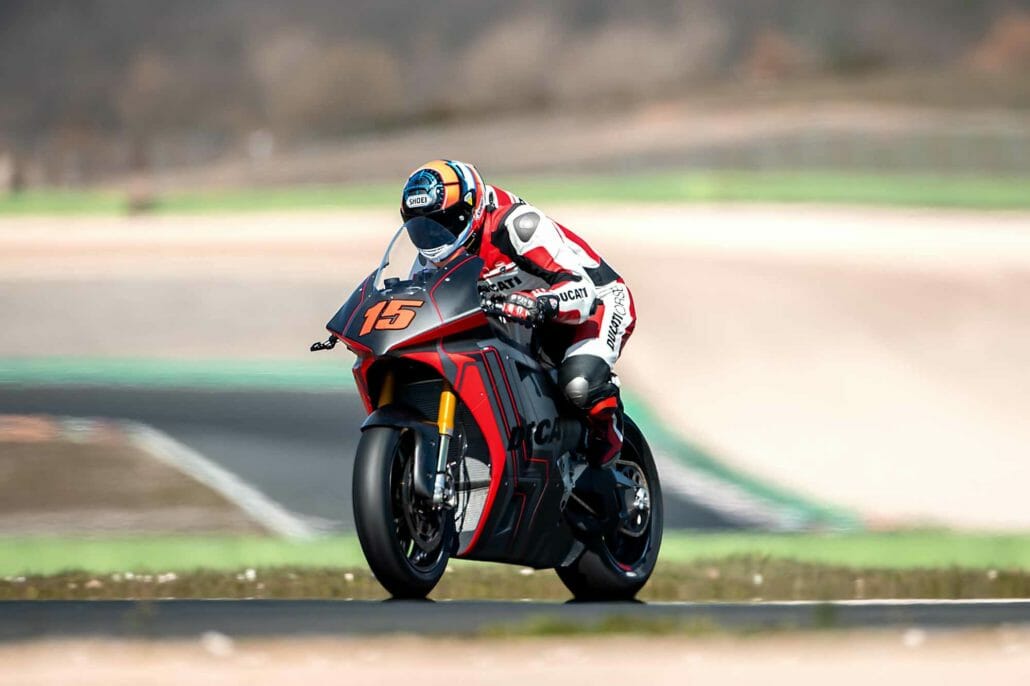
Ducati patent describes an electric motorcycle with 17,000 to 20,000 rpm, a position sensor on the gearbox and chain drive for a narrow build.
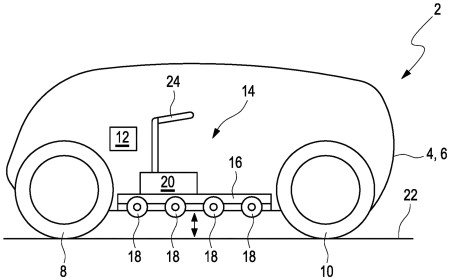
A new BMW patent reveals a completely enclosed, teardrop-shaped two-wheeler with an unusual stabilisation system. The Munich-based manufacturer appears to be continuing its work on a vehicle class positioned somewhere between motorcycle and car.
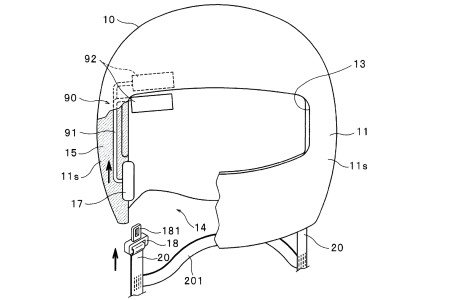
Autoliv, the world’s largest supplier of passive vehicle safety systems, has filed a patent for a novel chin strap system for motorcycle helmets. The technology is based on the retractor mechanism from automotive seatbelts and is designed to automatically adjust the helmet strap and lock it in place upon impact.
Chinese motorcycle manufacturer Zongshen has filed a patent for an unusual three-wheeler. The concept combines a classic trike mode with a tilting mode and uses two rear wheels instead of the now-common two front wheel configuration.
TVS Motor Company has filed a design patent in India for a café racer version of the Ronin. The concept is based on a factory custom unveiled in late 2024 and could expand the lineup in the 250cc segment.
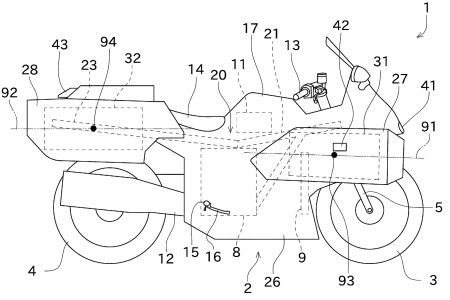
Kawasaki has patented a hydrogen motorcycle with four pressure tanks. What the concept means technically and why the project is unlikely to become a production model.
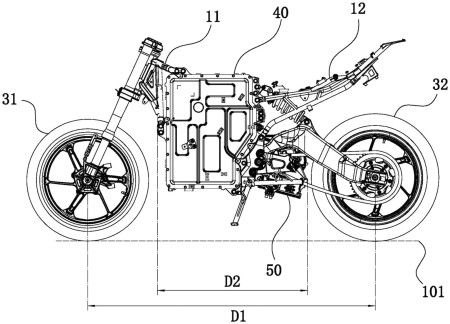
A new patent from CFMoto provides detailed insight into the development of a lightweight electric sports motorcycle. The documents show a design clearly focused on weight reduction and compact construction.
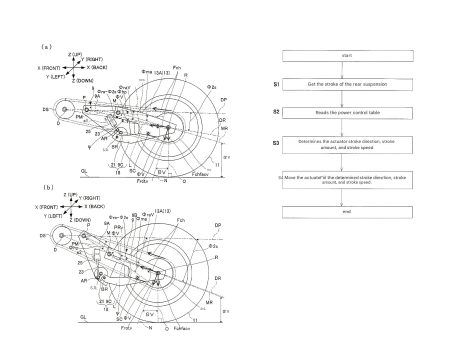
Yamaha has filed a patent for a swing arm with variable geometry. The design is intended to enable targeted changes to traction and cornering grip while riding.
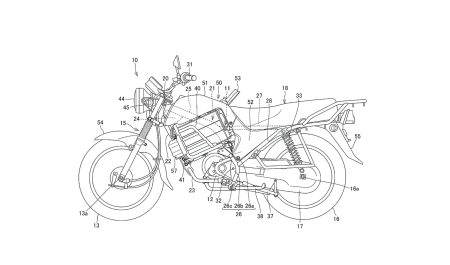
A recent patent from Honda provides insight into a very simply designed electric motorcycle. The design suggests a vehicle that is specifically designed for low cost and simple technology.
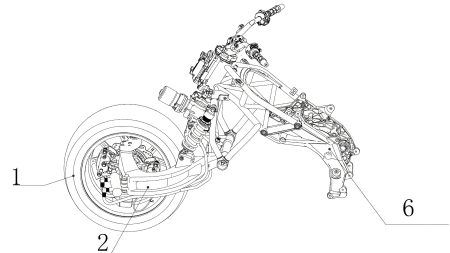
Zongshen has filed patents for servo-assisted wheel hub steering in motorcycles. The design is based on the Cyclone RA1000, whose chassis layout is to be extensively modified for this purpose.
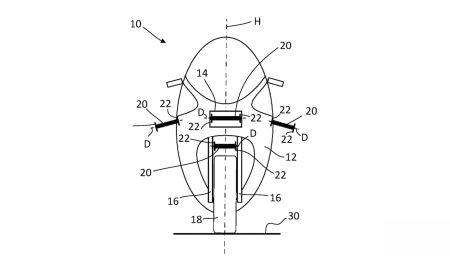
BMW has filed a patent describing the use of so-called Flettner rotors on motorcycles. The aim is to generate variable downforce and reduce the disadvantages of conventional winglets.
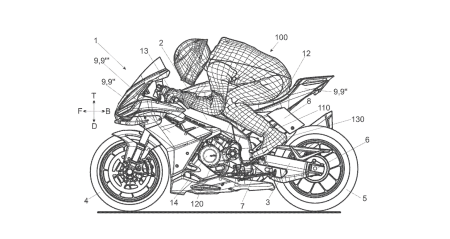
A new patent from Aprilia suggests that aerodynamic leg wings from MotoGP could also be used on production motorcycles in the future. The solution aims to improve aerodynamics when riding in a straight line and provide additional stability when leaning into corners.
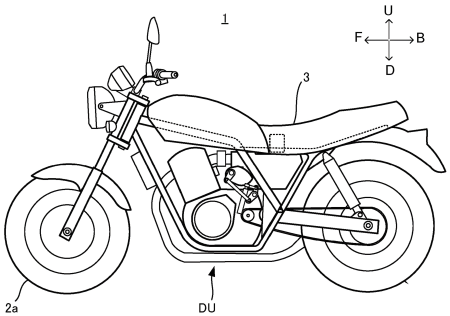
Yamaha is developing a new, simplified version of its semi-automatic transmission solution, Y-AMT. A recent patent shows how costs and complexity can be significantly reduced in order to make the technology usable for other model series.

A newly published patent from Honda shows an assistance system designed to actively steer motorcycles away from impending collisions. The technology could prevent accidents, but raises fundamental questions about control and responsibility when riding a motorcycle.
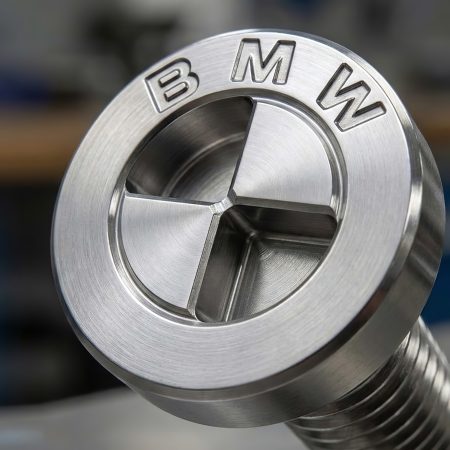
BMW has patented a new screw profile in which the well-known brand logo itself becomes a tool holder. The idea seems creative at first glance, but could make screwing on BMW motorcycles significantly more complicated.
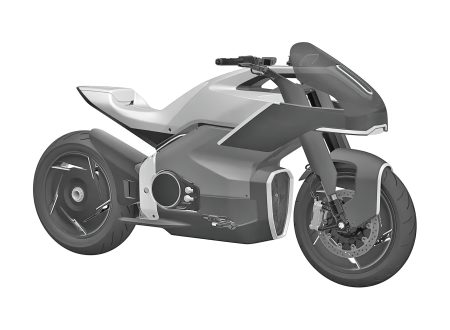
New patent drawings hint at another electric motorcycle from Honda. The as-yet-unnamed model features an unusual combination of scooter and cruiser and is intended to further expand Honda’s electric strategy.
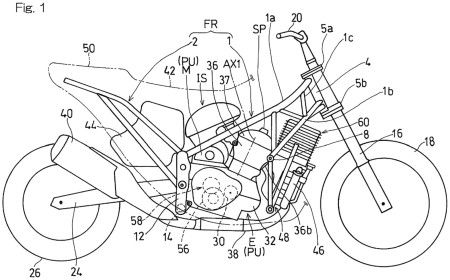
A new patent from Kawasaki hints at further hybrid models and a modified component layout. The focus is on improved battery cooling and possible implementation in a large-volume scooter.
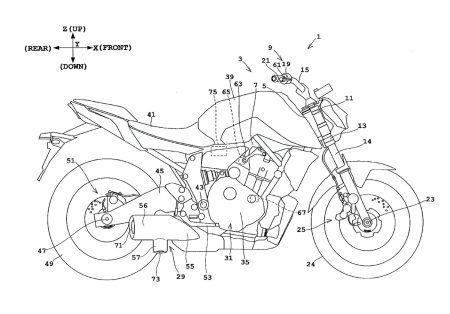
Yamaha is working on exhaust technology that actively influences riding conditions. New patent documents show systems that specifically redirect exhaust jets to support acceleration, wheelie control, and cornering behavior.
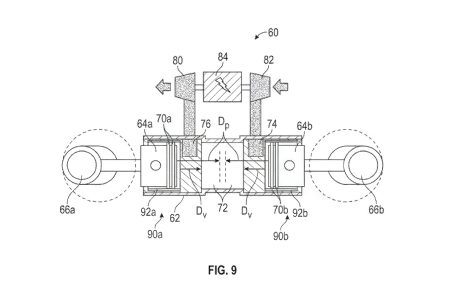
General Motors is working on a novel two-stroke concept designed to avoid the classic weaknesses of this type of engine. A recently published patent application shows how an electronically controlled valve system could reduce emissions and improve efficiency and durability.