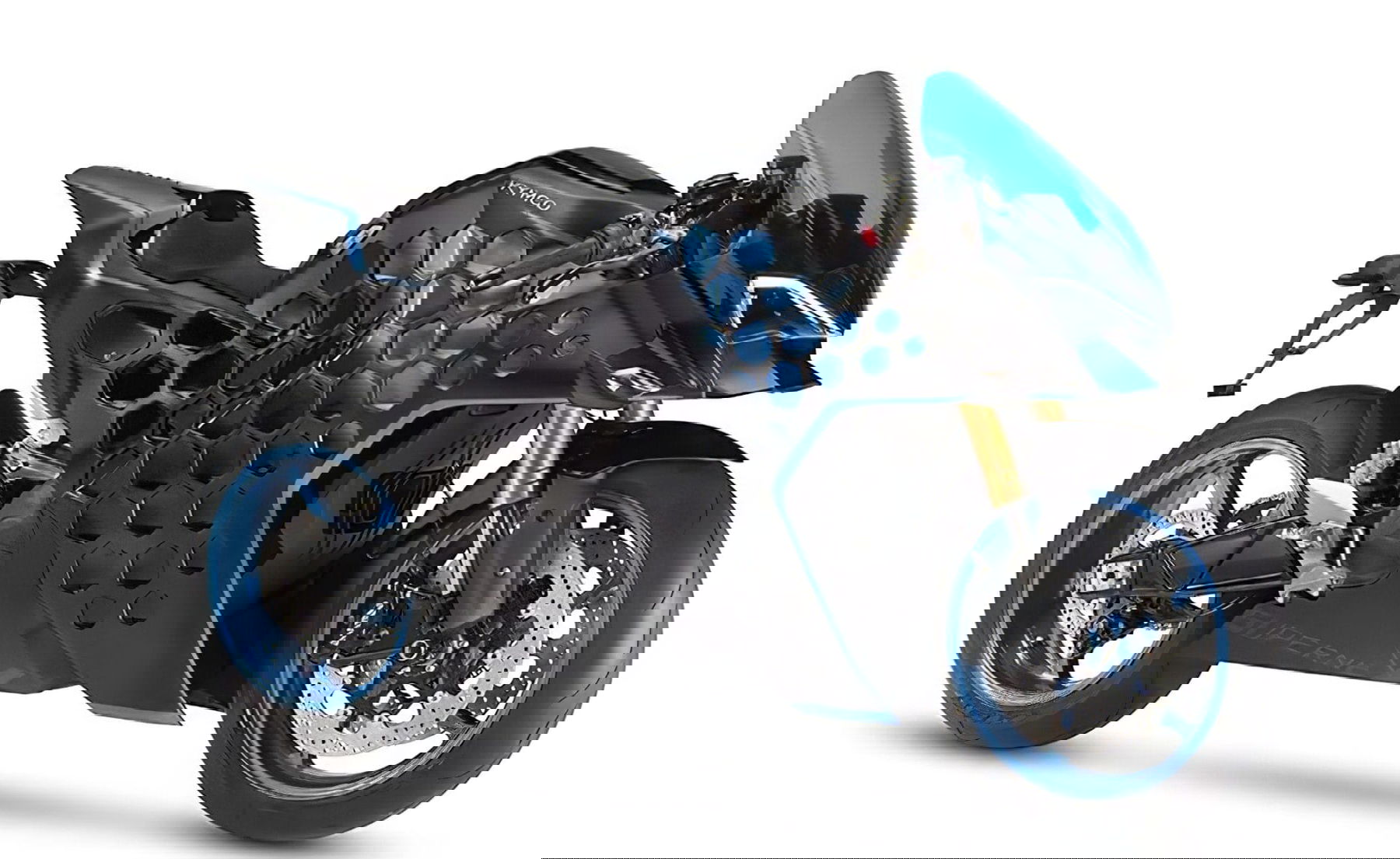
From airplane to motorcycle: movement instead of compromise
In aviation, movable wing parts such as ailerons or landing flaps are standard in order to regulate lift depending on the situation. On motorcycles, on the other hand, winglets have so far mostly remained static – which inevitably leads to a compromise: More downforce means more riding stability, but also higher air resistance. Kymco now wants to resolve this conflict of objectives – with a system that automatically adapts to the respective riding situation.
Patent shows dynamic system
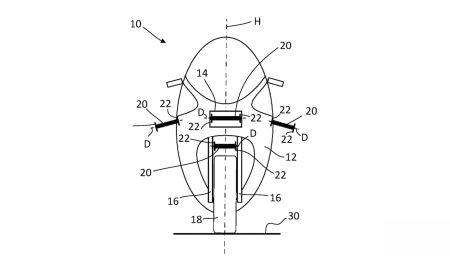
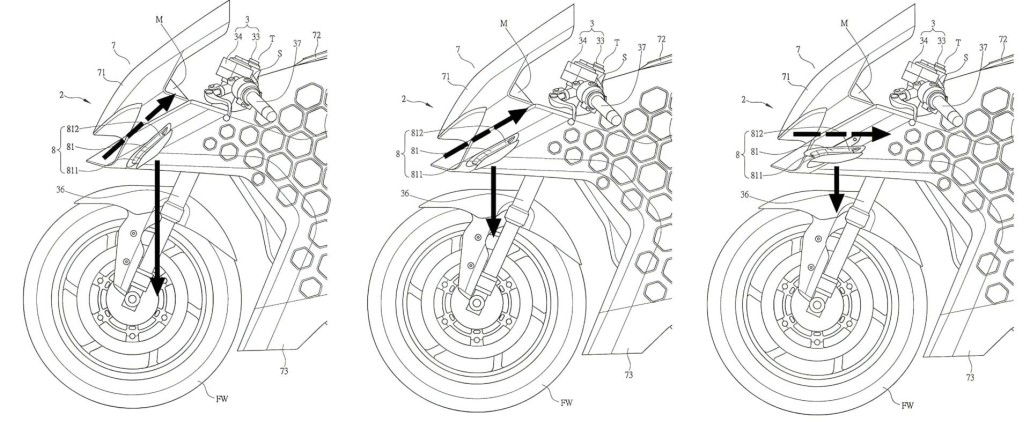
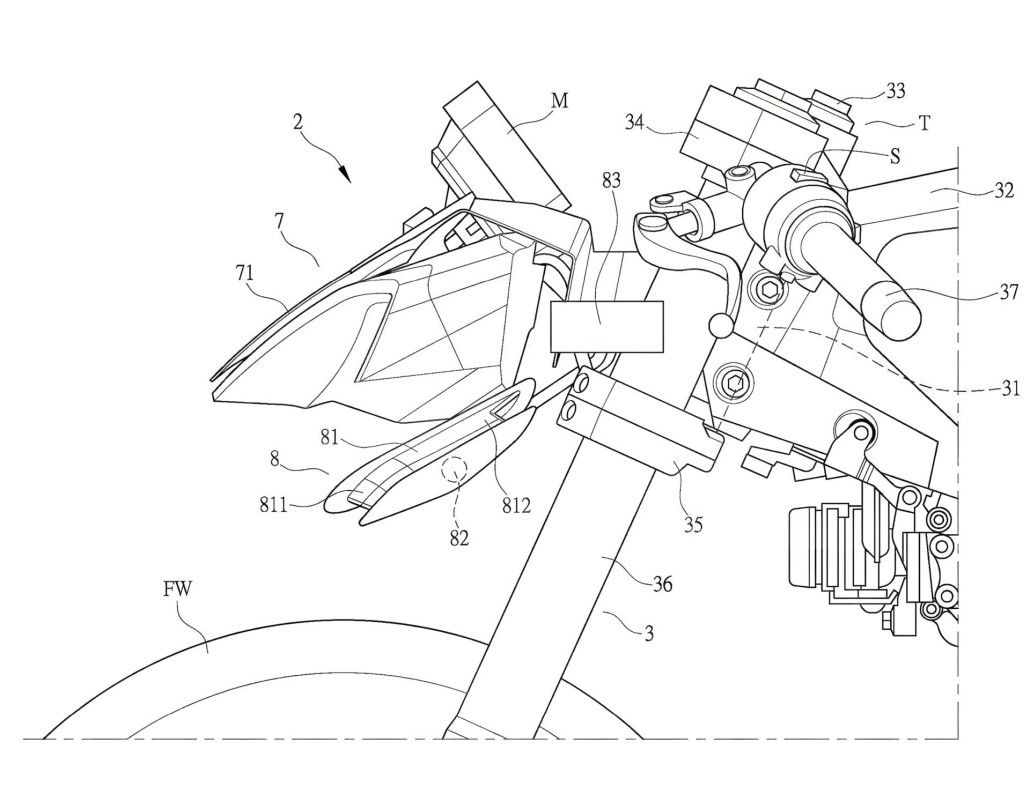
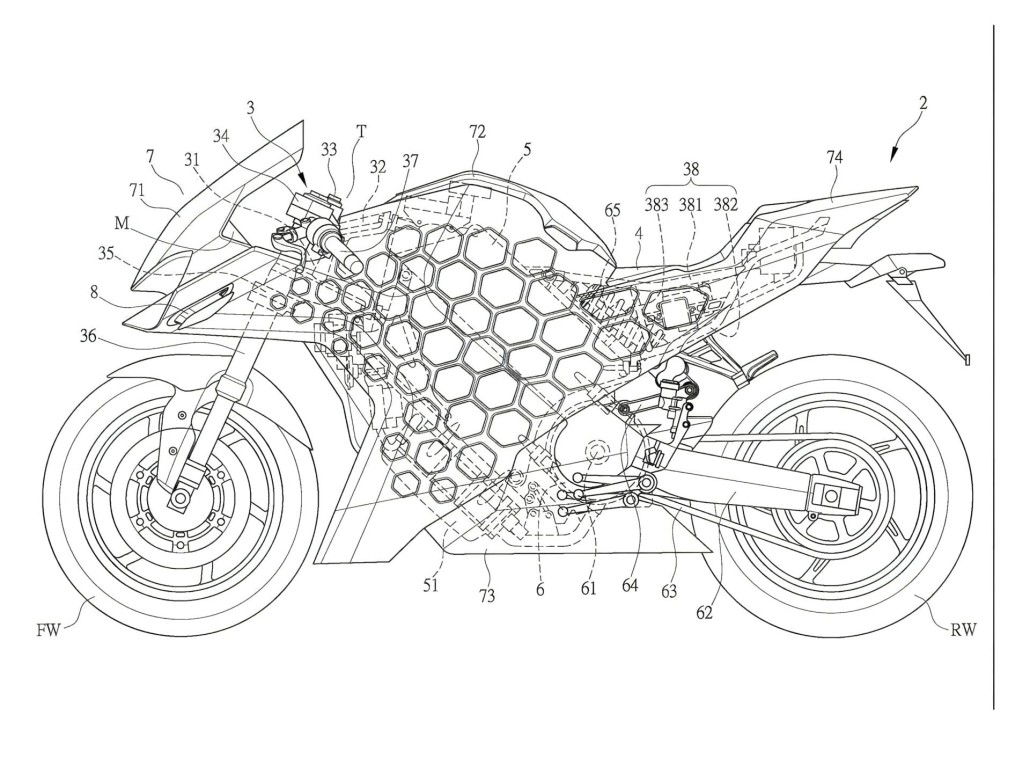
A recently published patent indicates that Kymco has developed a system in which electrically controlled winglets on the flanks of the motorcycle can change their position – similar to the diving rudders of a submarine. The principle: If the front wheel rises under heavy acceleration, sensors detect this pitch angle and control the wing position via stepper motors. The angle of attack is increased, generating additional contact pressure on the front wheel. When the situation stabilizes again, the winglets flatten and thus reduce drag.
Manual or automatic – both options possible
According to the patent document, the system can be controlled either manually from the cockpit or completely automatically. The automatic system uses data from an Inertial Measurement Unit (IMU), which constantly analyzes the driving dynamics. A pre-programmed algorithm adjusts the winglets as required. In this way, the advantages of aerodynamic downforce are used specifically when they are really needed.
Better acceleration, less electronic intervention
Winglets on motorcycles pursue a different goal than on racing cars: instead of cornering grip, the primary aim is to control wheelies during hard acceleration. With sufficient traction, the rise of the front wheel is often the limiting factor – more power does not automatically mean faster times. Conventional systems intervene here with traction control or interventions in engine management. Active winglets could solve this problem mechanically – more propulsion with less electronic control.
Integration into the SuperNEX concept
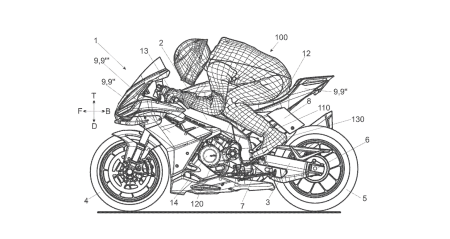
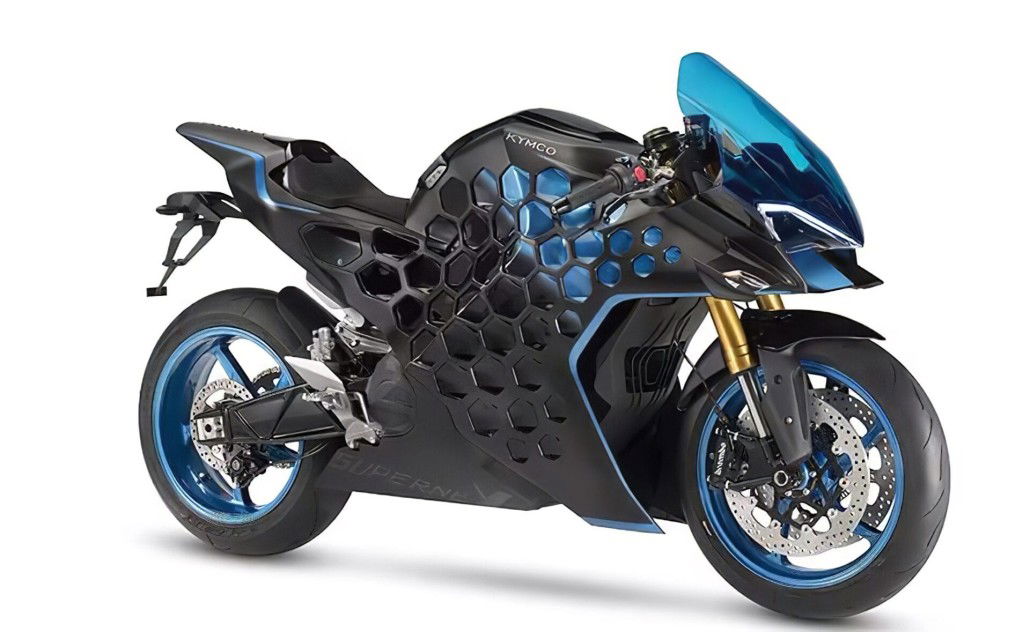
The patent application was submitted in the context of the second SuperNEX concept – an all-electric super sports bike that Kymco presented back in 2022. While the version at the time still had fixed winglets, the new patent drawing shows a further developed concept with adjustable wings. Even if the SuperNEX itself will probably not go into series production, this shows the technological path that Kymco is taking.
RevoNEX as a possible series candidate
The Kymco RevoNEX, which was presented at the EICMA 2023, is almost ready for series production. The electric motorcycle is based on the S2 Arrow platform – which is also used by LiveWire Del Mar, Mulholland and Alpinista – and was created as part of a collaboration with LiveWire, the electric motorcycle brand from Harley-Davidson. A unique feature of the RevoNEX: a simulated clutch and a real gearbox, which are intended to provide more riding fun and control – a rarity for electric bikes.
Whether and when the active winglets will actually find their way into series production remains to be seen. However, the technical maturity and manufacturers’ interest in adaptive aerodynamics indicate that moving wings could soon be a reality on the road – and not just on premium manufacturers’ super sports bikes.
[amazon bestseller=”Motorrad waschen” items=”3″]