Close Menu
Motorcycles.News – Motorcycle-Magazine
  • Home
    • All NEWS
  • Category
    • All NEWS
    • New Motorcycles
    • Presentations
    • Meetings / Events
    • Motorsport
    • MotoGP
    • RoadRacing
    • World SBK
    • NEWS
  • Sites
    • About Us
    • Impressum / Disclaimer / Datenschutz
  • Events
    • Donation Ride
    • Endurance
    • Event
    • Fair
    • Meeting
    • MotoGP
    • Motorsport
    • Race
    • Ride
    • Road Racing
    • SpeedMarathon
    • WSBK
  • Deutsch
  • English
Facebook X (Twitter) Instagram
Motorcycles.News – Motorcycle-Magazine
  • Home
    • All NEWS
  • Category
    • All NEWS
    • New Motorcycles
    • Presentations
    • Meetings / Events
    • Motorsport
    • MotoGP
    • RoadRacing
    • World SBK
    • NEWS
  • Sites
    • About Us
    • Impressum / Disclaimer / Datenschutz
  • Events
    • Donation Ride
    • Endurance
    • Event
    • Fair
    • Meeting
    • MotoGP
    • Motorsport
    • Race
    • Ride
    • Road Racing
    • SpeedMarathon
    • WSBK
  • Deutsch
  • English
YouTube Facebook Instagram TikTok
Motorcycles.News – Motorcycle-Magazine
Startseite » Ducati CEO Issues Clear Rejection of Self-Driving Motorcycles
Jason Chinnock
NEWS

Ducati CEO Issues Clear Rejection of Self-Driving Motorcycles

By Andreas Denner27 February, 2026
Share
WhatsApp Facebook Twitter Threads Email
Ducati North America CEO Jason Chinnock sees autonomous two-wheelers as a threat to the core of motorcycling. Technology should support the rider, but never replace them.
  • Ducati takes a clear stance against autonomous motorcycling
  • North America CEO Chinnock: Self-driving motorcycles would destroy the purpose of riding
  • Rider aids yes, full autonomy no: Ducati focuses on safety rather than removing control

The debate around autonomous driving has long reached every area of mobility. Waymo and Tesla robotaxis are already in regular operation in parts of the US, and the UK government has also approved test drives with self-driving vehicles. In the automotive sector, the gradual takeover by technology seems almost unstoppable. But in the motorcycle world, this development meets significantly more resistance. One of the most prominent critics is Jason Chinnock, CEO of Ducati North America, who positioned himself unambiguously in an interview with Business Insider.

Ducati’s Clear Line: Motorcycles Are Not Mobility Solutions

“I hope I never see the day,” Chinnock told Business Insider, making it clear that he never wants to experience the day when motorcycles steer themselves. A self-driving motorcycle would, in his view, “destroy the entire reason for motorcycling.” The reasoning behind this is as simple as it is fundamental: motorcycling is not purely a means of transport. It’s about riding dynamics, about consciously experiencing acceleration, lean angles, and the direct connection between human and machine.

“We are not building mobility. We’re building motorcycles. We’re building something for joy and for fun,” Chinnock explained. Anyone who hands over the riding experience might as well sit in a capsule and be driven from A to B. With this, he deliberately separates Ducati’s philosophy from the mindset of the tech industry, where mobility is primarily defined as seamless, efficient transportation.

Technology as a Helper, Not a Replacement

Chinnock’s statements don’t mean that Ducati rejects technological progress. Modern Ducati models are packed with electronics: cornering ABS, multi-level traction control, various riding modes, and adaptive cruise control have long been standard. These systems have gradually established themselves across the entire motorcycle industry over the years. Traction control was initially controversial, ABS was hotly debated, and semi-active suspension was once considered excessive luxury. Today, all these technologies are widely accepted and indispensable in everyday motorcycling.

The crucial difference, according to Chinnock, lies in the objective. All these systems exist to increase safety and sharpen the riding experience. They support the rider in their decisions but don’t take over control. Autonomous riding, on the other hand, would cross an entirely different boundary: the machine would no longer serve to amplify human input but would function independently of it. That, in Chinnock’s view, contradicts the very essence of motorcycling.

Physics Also Speaks Its Own Language

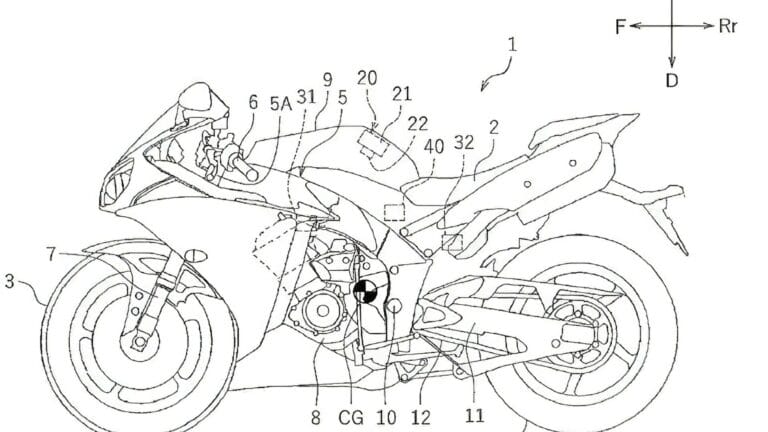
Beyond the philosophical dimension, there’s also a very practical side. A motorcycle on two wheels is inherently unstable. Balance only emerges through the physics of forward motion and through the rider’s constant micro-adjustments. While robotics research has shown that machines can be programmed to maintain balance on their own — autonomous motorcycle prototypes exist in controlled environments — technical feasibility is far from meaning that something is also sensible or desirable.

The Balancing Act Between Innovation and Identity

This positioning is also noteworthy within the corporate context. Ducati was founded in Bologna in 1926 and today belongs to the Volkswagen Group. In 2024, the brand sold approximately 55,000 motorcycles worldwide and generated revenue of around one billion euros (approximately 1.18 billion US dollars). Within the VW Group, Ducati holds a special position: while numerous models from the parent company already offer various levels of semi-automated assistance — from lane-keeping assistants to adaptive cruise control to parking aids — Ducati deliberately takes a different path.

In the future, however, motorized two-wheelers are expected to become more connected with their surroundings and other road users. This is particularly relevant when motorcycles share traffic with increasingly automated cars. Connected systems could ensure that motorcycles are better detected by the sensors of autonomous cars, which would significantly improve safety. The future, therefore, lies more in connectivity than in full automation.

Between Tradition and Future

Ducati wants to remain true to its philosophy: technology serves the rider — not as a replacement, but as assistance and to enhance safety. Whether motorcycling will still convey the same sense of freedom in 30 years as it does today, no one can say for certain. The big questions of the future revolve less around technical feasibility and more around societal acceptance and the mobility preferences of future generations.

Chinnock’s stance doesn’t come across as reactionary resistance to progress in this context, but rather as a deliberate line in the sand. Not every technological trend from the automotive world needs to be transferred to two wheels. Cleaner powertrains, smarter safety systems, better connectivity: all of this has its place in motorcycle development. But handing over control entirely to the machine would fundamentally change the motorcycle at its core. And that is precisely what Ducati apparently won’t allow.

What This Means for Me as a Motorcyclist

Chinnock’s statements are likely preaching to the choir for most motorcyclists. Anyone who has ever ridden along an empty country road on a Sunday morning, carved the perfect line through a set of corners, or taken off their helmet sweaty and happy after a long tour knows: that’s exactly what it’s about. Motorcycling is one of the last bastions of genuine, unfiltered experience in road traffic. Every ride demands full attention, every corner a conscious decision, every kilometer an active interplay of body and machine. That makes motorcycling exhausting, sometimes dangerous, but also incredibly alive. The fact that a manufacturer like Ducati stands up and says this experience is non-negotiable sends an important signal to the entire industry. At the same time, the development of rider aids shows that technology and riding enjoyment don’t have to be mutually exclusive. Cornering ABS has probably saved more motorcyclists’ lives than any debate about autonomous riding ever will. As long as electronics help the rider rather than replace them, everyone benefits in the end. The real danger lies in a different direction: when autonomous cars dominate mixed traffic and their sensors don’t reliably detect motorcycles. Whether connectivity will be sufficient here remains to be seen, because it will still take several decades before only motorcycles equipped with the corresponding technology are on the road.

#1
Michelin Pilot Power 2CT 190/50 ZR17 73W TL (091745)
Show customer reviews
mcpneu
Michelin Pilot Power 2CT 190/50 ZR17 73W TL (091745)*
by Michelin
    MICHELIN 091745Michelin – Pilot Power 2ct Rear – 190/50 Zr17 Tl 73(w) Rear – Sommerreifen
 Price: € 115.94 Jetzt kaufen bei mcpneu!*
Weitere Angebote »
mcpneu Price: € 115.94
Shipping: N/A
goodtires Price: € 117.76
Shipping: N/A
reifen.com Price: € 117.79
Shipping: N/A
reifenpro.at Price: € 118.27
Shipping: N/A
rsu.de Price: € 118.62
Shipping: N/A
Motorradreifen Direkt Price: € 119.27
Shipping: N/A
CHECK24 Autoteile Price: € 121.19
Shipping: N/A
Pneus Online DE Price: € 122.61
Shipping: N/A
rsu.at Price: € 125.20
Shipping: N/A
goodwheel.de Price: € 127.84
Shipping: N/A
Pneus Online AT Price: € 130.69
Shipping: N/A
TirendoAT Price: € 134.00
Shipping: N/A
Motointegrator Price: € 158.66
Shipping: N/A
StockNet Connect Price: € 175.44
Shipping: N/A
Preis inkl. MwSt., zzgl. Versandkosten
Zuletzt aktualisiert am 7 March, 2026 um 18:30 . Wir weisen darauf hin, dass sich hier angezeigte Preise inzwischen geändert haben können. Alle Angaben ohne Gewähr.

Avatar photo
Andreas Denner
  • Website
  • Facebook
  • Instagram

Redakteur bei Motorrad Nachrichten. Fokus auf Technik, Szene und Motorradpolitik – neutral, sachlich, verständlich. Verantwortlich für die Seiten www.Motorcycles.News, www.Motorrad.Training und den YouTube-Kanal "Motorrad Nachrichten", sowie deren social Media-Seiten.

Related Posts

Ducati Diavel V4 Facelift 2 1

Revised Ducati Diavel V4 appears in EU design registrations

26 January, 2026
MY26 MULTISTRADA V4 RALLY JADE GREEN 34 UC856423 High

Ducati Multistrada V4 Rally 2026: Extensive update for the adventure bike

8 October, 2025
Ducati Costructors World Champion 2025 UC842371 High

Ducati makes history: sixth consecutive MotoGP Constructors’ Championship title

8 September, 2025
Ducati Kindermotorrad 5 1

Ducati and Peg Perego: Electric children’s motorcycles get the passion for motorcycles rolling early on.

23 July, 2025
Ducati Automatisches Getriebe 1

Automated clutch from Ducati: technology for the road and racetrack with the ability to learn

8 June, 2025
MY26 PANIGALE V4 CARBON 3 UC761001 High

New Ducati Panigale V4 R (2026) Makes Test Debut at Misano

28 May, 2025
Most popular articles
harley davidson rmcr 16 1 Custombike

Harley-Davidson RMCR: Cafe Racer Concept with Revolution Max V-Twin at Mama Tried

Triumph Bonneville T120 Black DGR Limited Edition 45

Triumph Recalls Nearly 9,000 Bonnevilles Over Wiring Harness Defect

4 March, 2026
Kawasaki Bex

Is this Kawasaki’s electric future?

15 March, 2022
MotoGP Thailand GP Buriram 2026 Ducati Francesco Bagnaia 02

MotoGP Season Opener in Buriram: New Helmet Rule Caused Chaos in the Paddock

6 March, 2026

Upcoming events

Mar 27
March 27 - March 29

MotoGP – Amerika Grand Prix

Apr 10
April 10 - April 12

MotoGP – Qatar Grand Prix

Apr 24
April 24 - April 26

MotoGP – Jerez – Spanish Grand Prix

May 3
Featured All day

Love Ride Switzerland

May 25
May 25 - June 7

Isle of Man TT

View Calendar
YouTube Facebook Instagram TikTok
  • Imprint / Disclaimer / Privacy Policy
  • Imprint / Disclaimer / Privacy Policy
© 2026 MotorradMedien

Type above and press Enter to search. Press Esc to cancel.